
"Quality is good" is not a quality standard. Neither is "very good quality" or — our personal favorite — "A quality." If your purchase contract contains phrases like these, you and your factory are going to have a fascinating conversation when 8% of your shipment arrives with rattling motors, and neither of you can point to a document that says who was right.
The professional answer is AQL — Acceptable Quality Limit sampling — the statistical inspection framework behind nearly every serious B2B electronics order. It’s not complicated, but it must be defined before production, in writing, with numbers. Here’s how buyers of electric toothbrushes and water flossers set it up correctly.
What AQL Actually Is
AQL sampling is defined in ISO 2859-1 (also known as ANSI/ASQ Z1.4; in China, GB/T 2828.1). Instead of testing every unit or none of them, you inspect a statistically defined random sample from each lot, count defects, and compare against pre-agreed acceptance numbers.
The logic: with a sample size and acceptance number agreed in advance, both buyer and factory know exactly when a shipment passes or fails — no arguments, no vibes, no "but the sample looked fine."
An AQL number means: the defect rate that is still acceptable. AQL 1.0 = roughly 1% defective is tolerable; AQL 2.5 = 2.5%. Lower number = stricter standard.
Step 1: Classify Defects Before Production
This is where amateurs skip straight to numbers and professionals earn their margin. Defects fall into three classes, and oral care devices have specific ones you should name explicitly:
| Class | Definition | Oral Care Device Examples | Typical AQL |
|---|---|---|---|
| Critical | Safety or regulatory risk | Electrical fault, seal failure allowing water into battery compartment (see IPX7 testing), sharp edges, battery leakage, wrong plug type | 0 — zero tolerance |
| Major | Affects function or saleability | Won’t power on, missing modes, weak vibration output, charging failure, wrong language on retail packaging, logo error | 1.0–2.5 |
| Minor | Cosmetic, doesn’t affect use | Fine scratches, slight parting-line gap, small carton dents, slight color variation | 2.5–4.0 |
Two buyer-specific warnings:
- Waterproofing defects are critical-class, full stop. A water flosser with an intermittent seal isn’t a cosmetic issue — it’s a returns and liability issue
- Branding and labeling errors are major, not minor. A misprinted logo or missing regulatory marking on retail packaging can make a whole lot unsellable in certain markets — this is not "just a scratch"
Step 2: Choose Your AQL Levels
Common industry settings for small electrical appliances:
- Standard: Critical 0 / Major 2.5 / Minor 4.0
- Tight (recommended for premium retail): Critical 0 / Major 1.0 / Minor 2.5
Tighter AQLs mean larger samples and more rejected lots — you pay for strictness in inspection cost and occasional delays. For a mid-market electric toothbrush, Major 1.0 / Minor 2.5 is a reasonable premium-retail setting; for a budget SKU, 2.5/4.0 keeps inspection practical.
Step 3: Understand What the Sample Size Will Be
Sampling is based on lot size and inspection level (General Level II is the default). A worked example:
Order: 5,000 electric toothbrushes, General Inspection Level II
| Parameter | Value |
|---|---|
| Lot size | 5,001–10,000 range → code letter L |
| Sample size | 200 units |
| Major defects (AQL 1.0) | Accept ≤ 5, reject ≥ 6 |
| Minor defects (AQL 2.5) | Accept ≤ 10, reject ≥ 11 |
| Critical defects | Any one found = automatic lot rejection |
That last line is the one buyers forget to write down. Zero tolerance for critical defects must be explicit, or it will be negotiated at the worst possible moment.
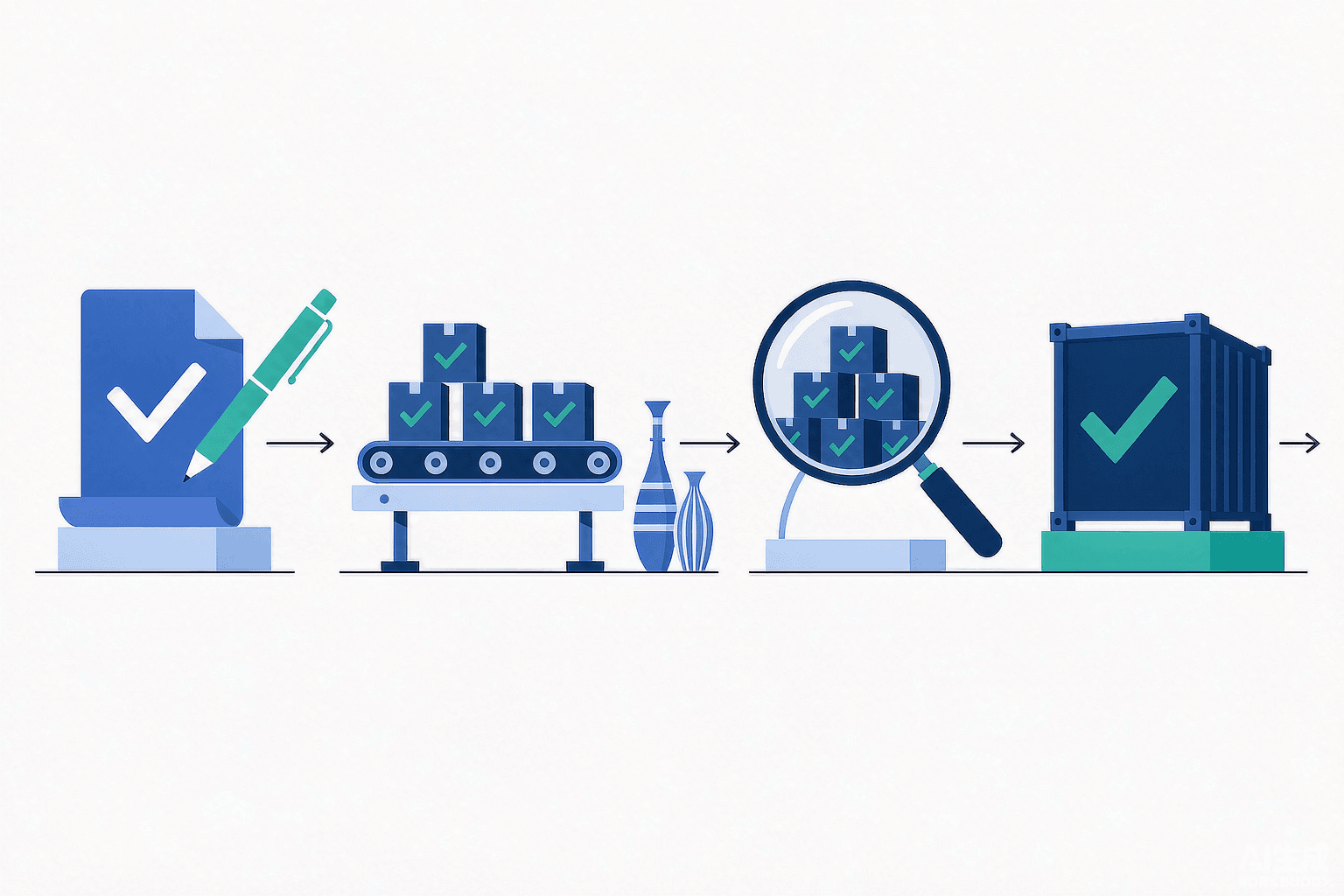
Step 4: Inspect at the Right Times
Three checkpoints, three purposes:
- Pre-production inspection (IPL) — components and first samples checked against the approved golden sample. Catches material substitutions early
- During production (DUPRO) — when 20–40% is completed. Catches systemic issues while there’s still time to fix them cheaply. This is where batch-level waterproof testing should be happening on the line — ask how the factory verifies IPX7 seals in production, not just on samples
- Final random inspection (FRI) — 100% produced and ≥80% packed. This is the classic "AQL inspection" most people mean, and the gate before shipment release
Step 5: Decide Who Inspects and Who Pays
Your options:
- Factory self-inspection — free, but the fox is guarding the henhouse. Use it as a baseline, not your only gate
- Third-party inspection company (SGS, QIMA, Bureau Veritas and similar) — typically a few hundred USD per man-day, bookable per shipment. The standard choice for buyers without local presence
- Your own visit — combine with a factory audit for first orders; inspect personally for ongoing ones
A fair and common arrangement: the factory performs internal QC at each checkpoint; the buyer conducts or commissions an FRI at their own cost; and if the lot fails, the rework and re-inspection costs fall to the factory. Get this cost-splitting rule into the contract — it’s the single clause that prevents the most disputes.
Step 6: Write It Into the Contract
Your inspection clause should reference:
- The standard: ISO 2859-1, General Inspection Level II, single sampling
- Your AQL numbers per defect class, with critical = 0 stated explicitly
- A defect list with photos — attach the golden sample definition. "Bad finish" starts arguments; photo #14 of a specific scratch depth ends them
- Checkpoint schedule (IPL / DUPRO / FRI) and notification timelines
- Remedies on failure: rework, re-inspection at factory cost, rejection and refund terms
Pair this with the commercial terms from our MOQ, lead time and pricing guide and your contract is more complete than most of the industry.
Five AQL Mistakes Buyers Make
- Agreeing AQL after production starts — then it’s a negotiation, not a standard
- No defect catalogue — without photos and definitions, "major" is whatever the inspector had for breakfast
- Critical = 0 left implied — implied clauses get forgotten under delivery pressure
- Inspecting only at FRI — a systemic sealing problem discovered at final inspection has already been built into 100% of your units
- Treating the golden sample as optional — it’s the referee for every dispute you’ll ever have
The Bottom Line
AQL isn’t about distrusting your factory — good manufacturers actually prefer buyers with clear standards, because disputes disappear when everyone signs the same numbers. The entire exercise costs you an afternoon of specification writing and protects you from the most expensive words in sourcing: "I thought you knew."
Set the numbers before the first unit is produced. Then hold everyone — including yourself — to them.
Setting up QC standards for your first oral care order? BESMAN manufactures sonic electric toothbrushes and water flossers with in-house assembly and batch-level testing — including IPX7 waterproof verification and motor performance testing on production batches, with CE, FCC, RoHS and UN38.3 documentation available. We work with buyer-defined AQL standards and third-party inspections, and we’ll show you our internal QC checkpoints before you commit. Discuss your QC requirements →
In this series: certifications & compliance
- UN38.3 & lithium battery shipping rules
- Lithium vs Ni-MH batteries
- Retail packaging & labeling compliance
- Russia & EAEU market entry guide
- IPX7 waterproofing explained