OEM vs ODM vs White Label: Which Manufacturing Model Fits Your Oral Care Brand?
You’ve decided to launch your own electric toothbrush or water flosser brand. Now comes the question that shapes everything — your cost structure, your control, your risk, and ultimately whether customers see you as a commodity reseller or a real brand.
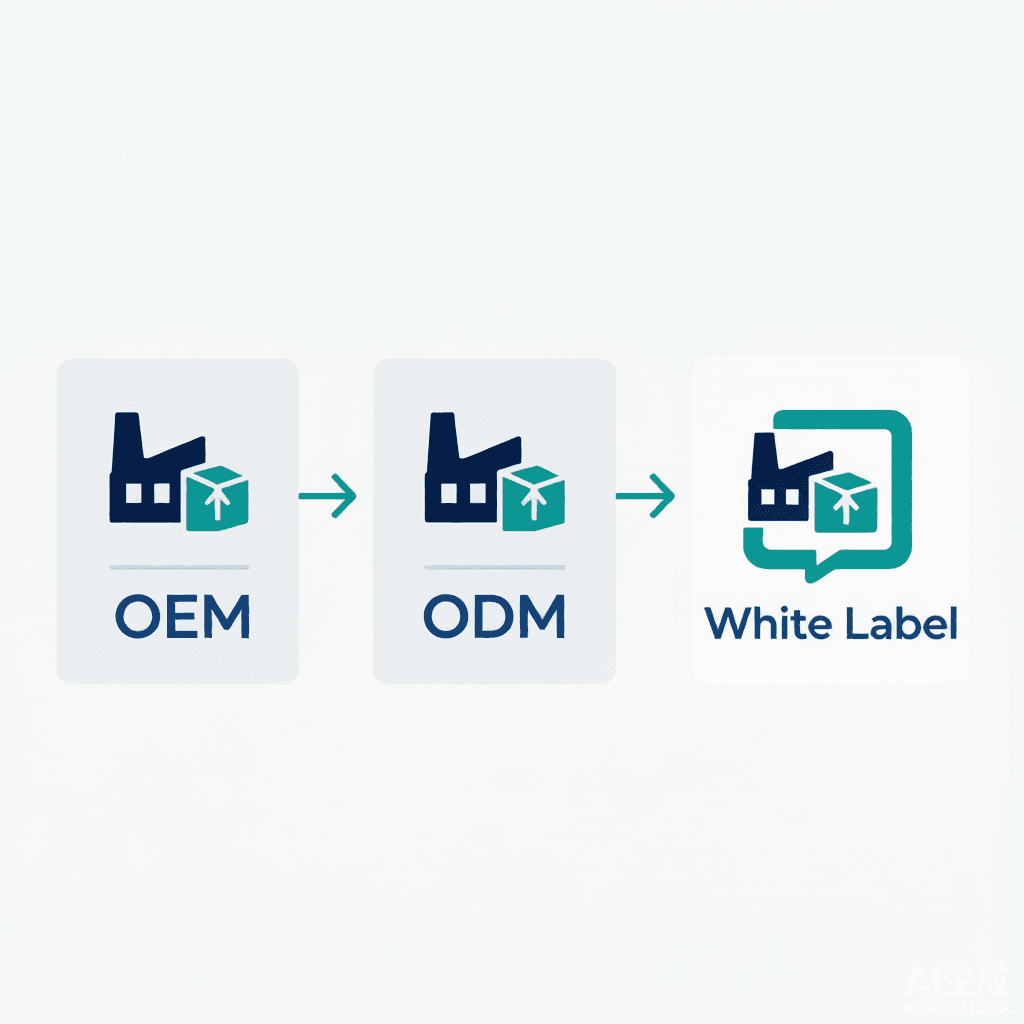
OEM, ODM, or White Label?
These three terms get used interchangeably, but they describe fundamentally different relationships with your factory. Picking the wrong one means paying for control you don’t need, or losing control you thought you had.
Here’s what each model actually means for an oral care brand, and how to choose.
The Three Models, Plainly
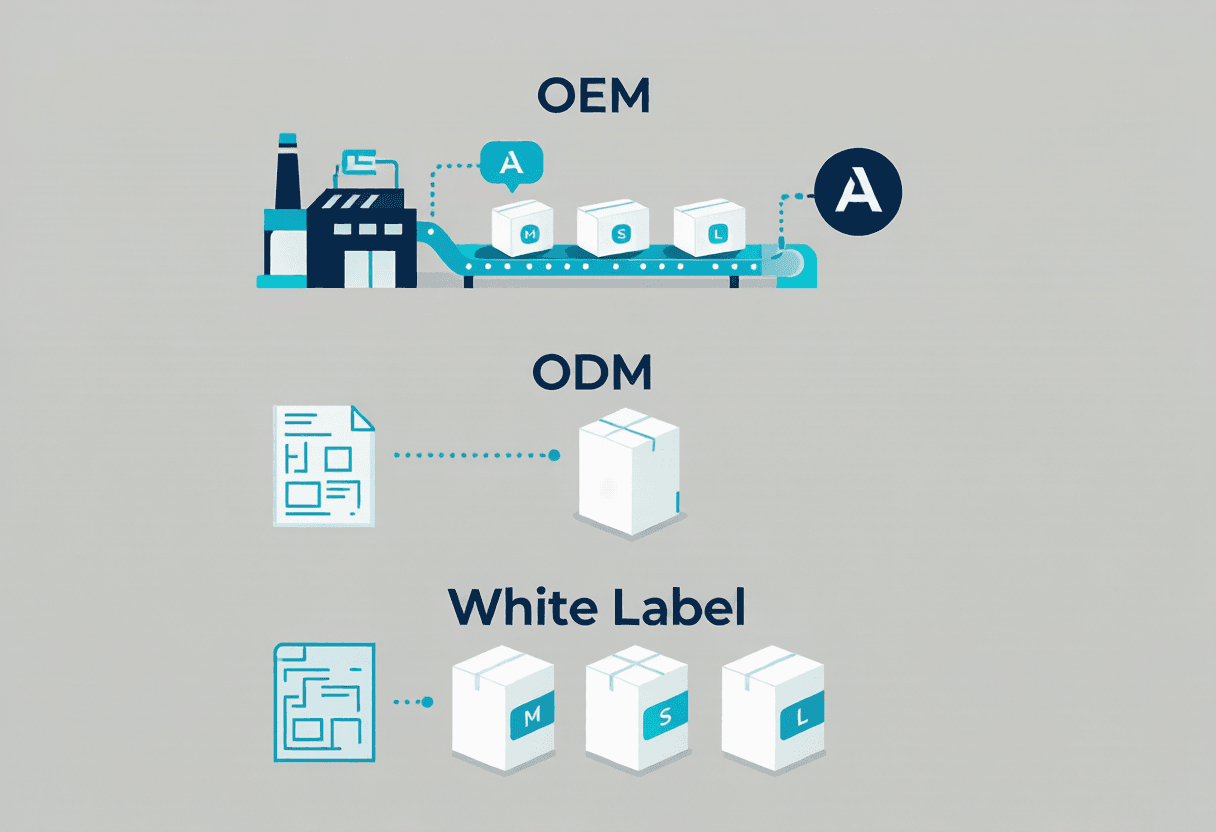
OEM (Original Equipment Manufacturer) — You own the design. The factory builds it to your exact specifications: your motor spec, your housing, your features, your quality tolerances. The factory is a contract manufacturer. You provide the product concept and often the engineering drawings or at least the requirements.
ODM (Original Design Manufacturer) — The factory owns the design. They’ve already developed a product, with tooling paid for, tested, and production-ready. You choose it, customize the shell/color/logo/features, and sell it under your brand. The factory does the heavy lifting on design.
White Label — You buy a finished, standardized product and put your brand on it. No design involvement, no customization beyond a label or box. It’s the same product everyone else’s brand is selling, just with your name on it.
The Side-by-Side
| Factor | OEM | ODM | White Label |
|---|---|---|---|
| Who owns the design | You | Factory | Factory |
| Customization level | Full (from scratch) | Medium (from existing base) | Minimal (label only) |
| Development cost | Highest (tooling + NRE) | Medium (tooling shared/waived) | Lowest |
| MOQ required | Higher | Medium | Lowest |
| Lead time to launch | 3–6+ months | 1–3 months | Weeks |
| Unit cost | Lowest at scale | Medium | Highest per unit |
| Exclusivity | Full | Shared (often non-exclusive) | None |
| Control over quality spec | Highest | Medium | Limited |
| Who you compete with | Your own design | Other brands using same base | Anyone selling the same product |
When OEM Makes Sense
OEM is for brands that treat product design as their core competitive advantage. You have (or can fund) genuine R&D, and you want a product no competitor can copy.
You’re a good OEM candidate if:
- You have a differentiated feature or design you believe in
- You’ve budgeted for tooling and engineering fees
- You can forecast volume high enough to amortize development cost
- You have someone on your team who can manage a technical spec and factory communication
The trade-off: OEM is slow and expensive up front. But done right, it gives you a defensible product. Most premium oral care brands that succeed over the long term are OEM-driven — because a white-label toothbrush gives customers no reason to choose you over the next brand.
The risk: if you don’t have engineering depth, OEM can spiral into an expensive development project that drags. You’re not just buying a product — you’re buying a product team.
When ODM Makes Sense
ODM is the pragmatic middle path, and it’s how the vast majority of successful new oral care brands actually launch. The factory has done the R&D, paid for the tooling, and de-risked the design. You focus on brand, positioning, market, and channel.
You’re a good ODM candidate if:
- You’re launching a first product and want speed to market
- You want to customize branding, colors, features, and packaging — but not reinvent the motor
- You want moderate MOQ and manageable upfront cost
- You value getting a proven, tested product rather than risking an unproven design
The trade-off: because the design is the factory’s, exclusivity is often limited. The factory may sell the same base model to other brands — which is exactly why choosing a factory that lets you differentiate through finish, features, packaging, and after-sales is important.
When White Label Makes Sense
White label is for testing a market or running a low-touch operation. You’re betting on your brand and distribution, not the product.
You’re a good white-label candidate if:
- You want to validate demand before investing in custom tooling
- You’re entering a price-sensitive channel and competing on cost
- You have strong distribution but no need for product differentiation
- You’re running a trial line, marketplace listing, or a retail test
The trade-off: zero defensibility. If your only advantage is "our brand on the same toothbrush as three competitors," you’ll win or lose purely on price and marketing. Margins compress, and there’s nothing stopping anyone from undercutting you.
The Hybrid Reality: Most Brands Mix Models
In practice, smart brands don’t lock into one model forever. A typical progression:
- Launch with an ODM or white-label product to get revenue flowing
- Test which features customers actually value and pay for
- Graduate to OEM on the proven bestseller once volume justifies tooling
- Differentiate with a signature SKU that competitors can’t copy
This staged approach spreads risk while still building toward a defensible product line. The factory you choose at step 1 should be one that can grow with you into step 3 — which is a key reason to evaluate a manufacturer’s OEM capability even if you’re starting with ODM.
Questions to Ask Any Manufacturer
Whichever model you pursue, ask these before committing:
"Is this an OEM, ODM, or white-label product?" Force clarity. Some factories blur the lines to make a standard product sound like a custom one.
"Who owns the mold/tooling, and what happens if I leave?" For OEM, clarify tooling ownership in writing. If you pay for it, you should control it.
"Do you offer customization on this ODM base?" Shell color, bristle type, features, charging, packaging — know exactly how far customization can go.
"Is this design exclusive to me, and at what volume?" Some factories offer exclusivity above a volume threshold.
"What’s the realistic MOQ and lead time for each model?" Budget products often advertise low MOQs that balloon once you factor in custom packaging and labels.
"Can you support my transition from ODM to OEM later?" A manufacturer that can grow with you protects your future options.
The Bottom Line
- White label if you’re testing or competing purely on distribution and price.
- ODM if you want a real brand quickly, with moderate control and cost — the right default for most new oral care brands.
- OEM if you have a differentiated design and the budget and volume to own it.
The mistake to avoid: paying ODM-level customization costs while accepting white-label-level exclusivity — or worse, assuming your "custom" product can’t be sold to your competitor.
A good manufacturer will walk you through which model genuinely fits your goals, not just upsell you the most expensive option.
Besman offers OEM, ODM, and white-label manufacturing for electric toothbrushes and water flossers, with the tooling and R&D capacity to help you move from ODM to full OEM as your brand grows. Contact us to discuss which model fits your product plan.