
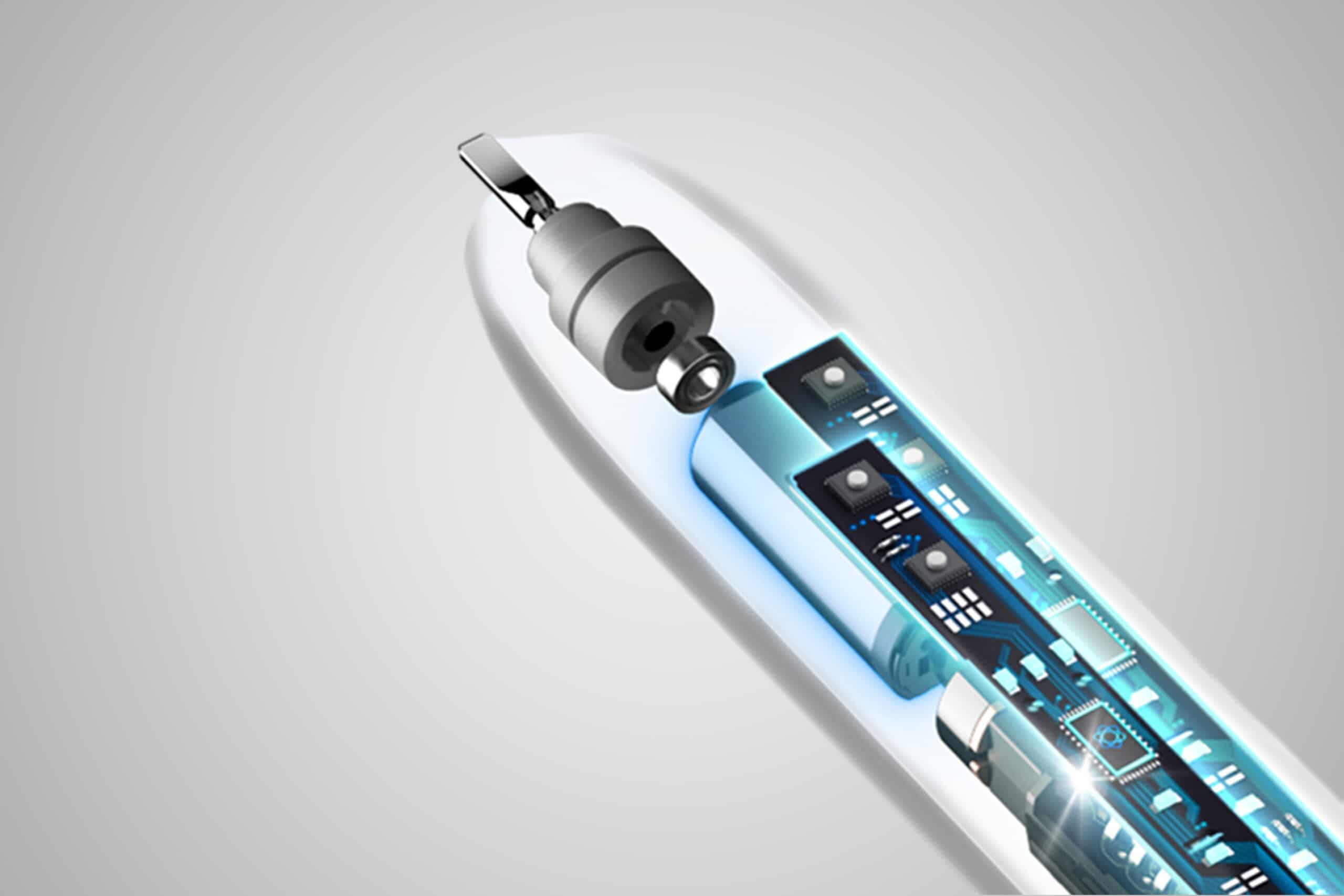
Sonic Motor Technology Deep Dive: Frequency, Torque & Noise for OEM Buyers
Almost every electric toothbrush spec sheet leads with the same number: frequency. "40,000 strokes per minute." "62,000 vibrations." "Ultra-sonic 96,000."
Brand buyers use this number to compare products. Consumers use it to compare products. And it is one of the least reliable indicators of actual cleaning performance on the market.
Frequency is one of four parameters that determine how a sonic toothbrush actually performs. The other three — amplitude, torque, and drive efficiency — are rarely printed on packaging, because they’re harder to measure and less impressive to market.
If you’re specifying a product for OEM manufacturing, here’s what actually matters.
How a Sonic Drive Actually Works
A sonic toothbrush converts electrical energy into mechanical oscillation using one of two motor architectures:
1. Eccentric rotating mass (ERM) — a small DC motor with an asymmetric weight on the shaft. As the motor spins, the off-center mass creates vibration. Cheap, simple, and found in budget devices.
- Frequency: typically 15,000–25,000 per minute
- Amplitude: low, and drops significantly under load
- Cost: lowest
- Weakness: the "movement" is vibration, not a controlled sweeping stroke. Brushing pressure kills performance.
2. Linear resonant actuator / magnetic drive (LRA) — an electromagnetic drive that pushes a sprung shaft back and forth along its axis, with no rotating parts. This is what "sonic" means in a premium context.
- Frequency: typically 30,000–40,000 per minute
- Amplitude: 4–6mm at the bristle tips (measurable, controlled)
- Cost: higher, requires a driver IC and precise mechanical tolerance
- Strength: consistent stroke even under brushing load; far more efficient than ERM
Both are marketed as "sonic." The performance difference is substantial — which is why two devices advertising 31,000 strokes per minute can feel completely different in the mouth.
When specifying, always ask which drive architecture the motor uses. This is the single most informative question you can ask about a sonic product.
The Four Parameters That Actually Define Performance
| Parameter | What It Means | Typical Range | Why It Matters |
|---|---|---|---|
| Frequency | Oscillations per minute | 15,000 (ERM) – 40,000 (LRA) | Marketing’s favorite number, but only half the story |
| Amplitude | Physical travel distance at bristle tip | 3–6 mm (sonic), <1 mm (ERM) | Determines actual sweep distance across the tooth surface |
| Torque / Stall force | Resistance to slowing under pressure | Varies widely; often unspecified | Determines whether performance collapses when users press |
| Drive efficiency | Mechanical output per unit of battery energy | 40–70% (LRA), lower for ERM | Determines battery life and heat generation |
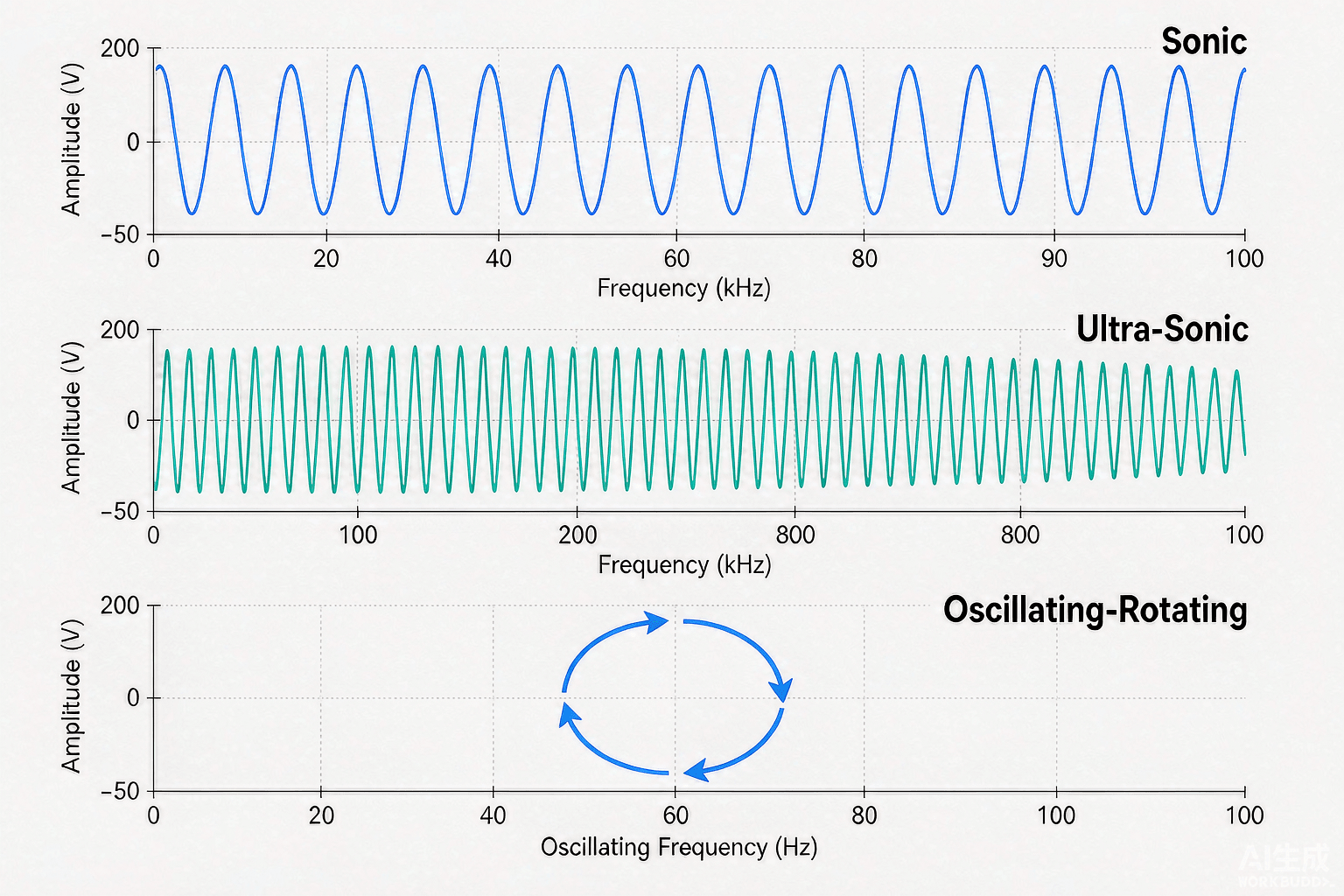
The key relationship: cleaning effect is roughly proportional to frequency × amplitude. A 40,000/min motor with 3mm amplitude moves bristles less than a 31,000/min motor with 6mm amplitude. This is why frequency alone tells you very little.
Some manufacturers deliberately push frequency while reducing amplitude — it produces an impressive spec line and a cheaper motor. Guard against this by asking for both numbers.
Torque: The Parameter Nobody Tests Until It Fails
Here’s the scenario that ruins a product: the user brushes normally, applies natural pressure, and the motor stalls or slows dramatically. The brushing session silently becomes ineffective — and the user has no way to know.
What to specify:
- Stall torque — the load at which the motor stops
- Speed drop under rated load — how much frequency falls at normal brushing pressure (a good design holds within 10–15%)
A quality LRA design maintains its stroke under typical brushing pressure because the drive is electromagnetically forced. An ERM motor has no such mechanism — pressure physically constrains the vibration.
How to verify: ask the factory for a load curve — frequency and amplitude plotted against applied force. A manufacturer with a motor test bench can produce this. A manufacturer who can’t is either outsourcing the motor entirely or not testing it.
Noise: Where It Comes From and How to Reduce It
Noise is one of the top return drivers in oral care e-commerce. Reviews complaining about "too loud" are common even on genuinely capable devices.
Four noise sources in a sonic toothbrush:
- Motor vibration transmitted through the housing — the dominant source. Mitigated by damped motor mounts and housing material selection.
- Bristle and shaft rattle — looseness in the drive shaft/bristle head interface. A tolerance problem.
- Resonance with housing geometry — the housing amplifies certain frequencies. Fixable with geometry and mass changes.
- Airborne motor whine — inherent to high-RPM operation, partially unavoidable.
Practical noise targets:
| Class | Measured at 30cm | Feels Like |
|---|---|---|
| Loud | > 70 dB | Noticeably noisy; common complaint in reviews |
| Acceptable | 60–70 dB | Typical mid-market device |
| Quiet | 50–60 dB | Premium positioning, strong review advantage |
| Very quiet | < 50 dB | Best-in-class; requires careful engineering |
When specifying, ask: "At what distance and at what speed setting is your noise spec measured?" An unqualified "55dB" claim is meaningless — nearly any motor measures quietly at low speed or from a meter away.
Reducing noise costs money — damped mounts, tighter tolerances, better materials. It’s one of the best places to spend budget if your positioning is premium, because the user experiences it in every single use.
Life and Reliability: What to Test
Motor failure is a long-tail problem. It rarely shows up in the first month and always shows up in reviews during month eight.
Ask the factory for:
- Rated motor life in hours — target 500+ hours of operation for a mid-market product; premium devices should aim higher
- Endurance test protocol — continuous operation at rated load, with periodic frequency/amplitude measurement to detect degradation
- Drop test combined with function test — motors survive drops but shaft alignment sometimes doesn’t
- Thermal behavior — sustained operation heat build-up shortens electronics life; ask about temperature rise at 10 minutes of continuous use
What good looks like: a factory that runs endurance testing to failure on sample units, not just a pass/fail functional check at end of line.
How Motor Choice Affects Your Cost Structure
| Motor Type | Relative Unit Cost | Battery Implication | Best Fit |
|---|---|---|---|
| ERM (basic DC) | Lowest | Higher current draw per stroke equivalent | Entry-level, price-driven SKUs |
| LRA (magnetic drive) | Mid to high | More efficient, better runtime | Mid to premium sonic products |
| Custom LRA with driver IC | Highest | Best efficiency, tunable profiles | Premium/brand-differentiated units |
The trade-off is not simply "better motor, higher price." A more efficient LRA can allow a smaller battery for the same runtime — which reduces weight, reduces the battery compliance burden, and can partially offset the higher motor cost. Battery chemistry interacts with this decision; our battery comparison covers the chemistry trade-offs in detail.
Custom motor development is also where OEM and ODM economics split — see our manufacturing model comparison for how that affects tooling and MOQ. And because motor loads change battery draw, the airtightness of the housing matters just as much as the spec sheet — a poorly sealed unit fails before the motor does, as our IPX7 guide explains.
The Spec Sheet Questions to Send Your Factory
Copy these into your next RFQ:
- Which drive architecture does this motor use — ERM or LRA?
- What are the frequency AND amplitude (mm) at the bristle tip?
- What is the noise level, measured at what distance and what speed setting?
- What is the speed drop under a standard brushing load? Do you have a load curve?
- What is the rated motor life in hours, and what endurance test protocol do you run?
- Is the motor produced in-house, or sourced? From which supplier?
- What’s the measured temperature rise after 10 minutes of continuous operation?
- Can you provide a motor test report from the most recent production batch?
A supplier who can answer all eight is a supplier with real engineering behind the product. A supplier who answers only the first is selling you a spec sheet, not a motor.
The Bottom Line
Frequency is the easiest number to advertise and the least useful number to specify. If you’re building a sonic toothbrush product line, the parameters that determine whether customers keep it past the return window are amplitude, torque consistency, noise, and life — none of which appear in the marketing copy of most competitors.
Specify all four, demand the test data behind them, and you’ll be building a product that survives its reviews.
Besman manufactures sonic electric toothbrushes with both ERM and magnetic-drive motor options, with in-house motor testing including load curves, noise measurement, and endurance verification. Send us your spec to discuss motor configuration for your product.